
A vibrating screen is one of the most important screening machines in crushing, grinding, aggregate production, and mineral processing plants. It is used to separate bulk materials into different particle sizes by means of vibration and screen mesh classification. In a complete production line, vibrating screens help control product size, improve crushing efficiency, reduce unnecessary re-crushing, and ensure stable final product quality.
For materials such as granite, basalt, limestone, cobblestone, bluestone, quartzite, barite, gypsum, and metal ores, proper screening is essential for achieving the required product size and improving the performance of downstream equipment.
Why Vibrating Screens Are Important
In a crushing and screening plant, the vibrating screen is not only a size classification machine. It also acts as a control point for the entire process. If the screen works efficiently, qualified materials can be discharged in time, while oversized materials are returned to the crusher for further crushing.
This improves production efficiency, reduces energy consumption, protects crushers from overload, and helps produce uniform aggregates or mineral products.
What Is a Vibrating Screen?
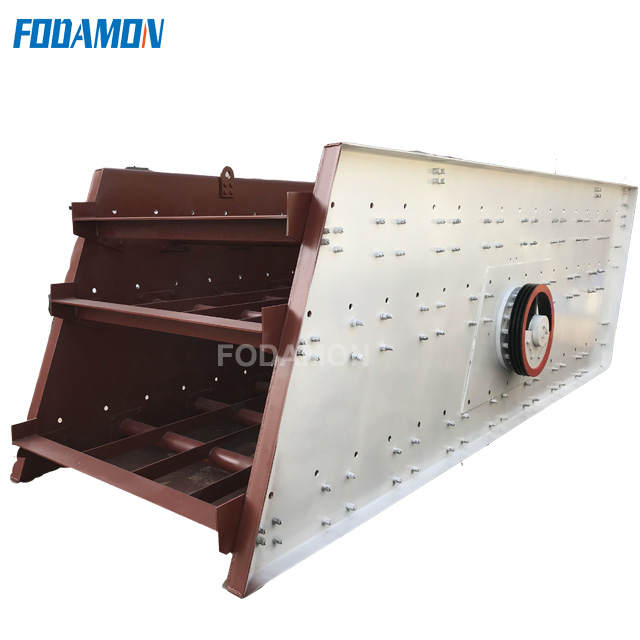
A vibrating screen is a mechanical screening device that uses vibration to move materials across one or more screen decks. When materials are fed onto the screen surface, smaller particles pass through the screen openings, while larger particles remain on the screen deck and move toward the discharge end.
Depending on the application, vibrating screens can be used for coarse screening, fine screening, dry screening, wet screening, grading, dewatering, and material separation.
How Does a Vibrating Screen Work?
The working principle of a vibrating screen is based on vibration, gravity, and particle stratification. The vibration exciter or vibrating motor generates vibration force, causing the screen box to move in a circular, elliptical, or linear motion.
As the material moves along the screen surface, vibration loosens and stratifies the particles. Fine particles move downward and pass through the screen mesh, while larger particles stay on top and are discharged from the end of the screen. Raw Material
↓
Vibrating Feeder
↓
Jaw Crusher
↓
Vibrating Screen
↓
Cone Crusher / Impact Crusher
↓
Final Product
In many stone crushing plants, materials are first fed by a vibrating feeder, then crushed by a jaw crusher. After primary crushing, the vibrating screen separates qualified materials from oversized materials. The oversized materials may be sent to a cone crusher or impact crusher for secondary crushing.
Main Components of a Vibrating Screen
- ✅ Screen Box: Supports the screen deck and bears the material load.
- ✅ Screen Mesh: Determines the final separation size.
- ✅ Vibration Exciter: Generates the vibration force required for screening.
- ✅ Motor: Provides power for the vibration system.
- ✅ Springs: Absorb vibration and protect the supporting structure.
- ✅ Bearings: Support rotating components under high vibration and impact loads.
- ✅ Discharge Chutes: Guide different size fractions to conveyors or storage areas.
Types of Vibrating Screens
Circular Vibrating Screen
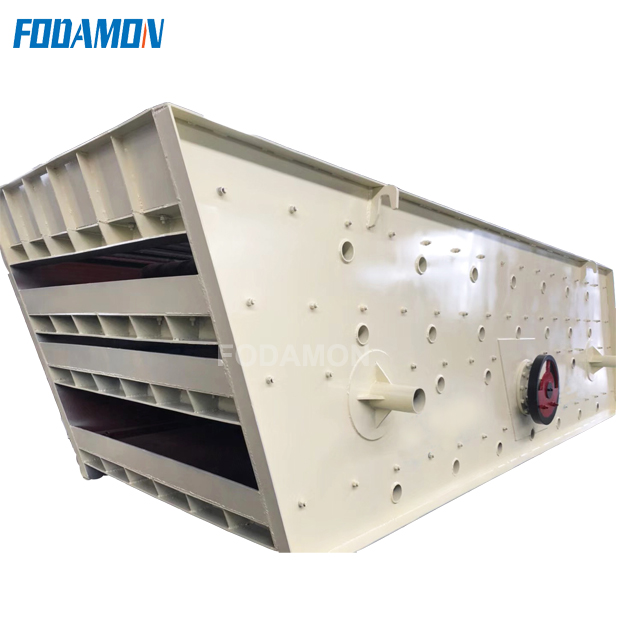
Circular vibrating screens are widely used in mining, quarrying, aggregate production, and construction material processing. They move in a circular motion and are suitable for screening medium and coarse materials.
Linear Vibrating Screen
Linear vibrating screens use double vibration motors or exciters to produce linear motion. They are suitable for fine material classification, dewatering, coal processing, and some mineral processing applications.
Inclined Vibrating Screen
Inclined vibrating screens combine gravity and vibration to move materials efficiently. They are commonly used in stone crushing plants and aggregate production lines.
Multi-Deck Vibrating Screen
A multi-deck vibrating screen can separate materials into several different size fractions at the same time. It is often used when the production line needs multiple final products, such as 0–5 mm, 5–10 mm, 10–20 mm, and 20–30 mm aggregates.
Materials Commonly Processed by Vibrating Screens
Vibrating screens can process a wide range of hard rock, soft rock, industrial minerals, ores, and recycled materials. Different materials require different screen mesh sizes, vibration amplitudes, deck structures, and wear-resistant designs.
Aggregate and Stone Materials
- 🪨 Granite Crushing Solution
- 🪨 Basalt Crushing Solution
- 🪨 Limestone Crushing and Grinding Solution
- 🪨 Bluestone Aggregate Processing Solution
- 🪨 Cobblestone Crushing Solution
- 🪨 Sandstone Processing Solution
- 🪨 Shale Crushing Solution
- 🪨 Quartzite Crushing Solution
- 🪨 Marble Processing Solution
For hard materials such as granite, basalt, quartzite, and cobblestone, the vibrating screen should use strong screen mesh, wear-resistant liners, and a stable screen box structure. These materials are abrasive and may cause faster wear on screen media.
Industrial Mineral Materials
- 🔹 Barite Processing Solution
- 🔹 Fluorite Processing Solution
- 🔹 Gypsum Powder Processing Solution
- 🔹 Calcite
- 🔹 Dolomite
- 🔹 Bentonite
- 🔹 Quartz Sand
For industrial minerals, screening is often used before grinding, classification, or powder processing. Proper screening can remove oversized particles, improve mill feeding stability, and reduce unnecessary energy consumption.
Metal Ore and Mining Materials
- ⛏️ Magnetite Processing Solution
- ⛏️ Hematite Ore
- ⛏️ Gold Ore
- ⛏️ Copper Ore
- ⛏️ Manganese Ore
- ⛏️ Iron Ore
In mineral processing plants, vibrating screens are used for ore classification, pre-screening before crushing, closed-circuit screening, and final product separation. For wet or sticky ores, water spraying or special screen media may be required.
Screening Is Not Only About Size
Good screening performance depends on material characteristics, moisture content, feed size, screen angle, vibration amplitude, mesh opening, and capacity requirements. A suitable vibrating screen can make the whole crushing plant more stable and more economical.
Applications of Vibrating Screens
- ✅ Stone crushing plants
- ✅ Aggregate production lines
- ✅ Sand making plants
- ✅ Mining and mineral processing plants
- ✅ Coal preparation plants
- ✅ Cement and building material plants
- ✅ Construction waste recycling plants
- ✅ Industrial mineral grinding plants
In a sand making plant, vibrating screens are often used together with a sand making machine to separate finished sand and return oversized particles for further crushing. In mobile crushing applications, vibrating screens can also be integrated into a mobile crusher plant for flexible on-site production.
How to Choose the Right Vibrating Screen
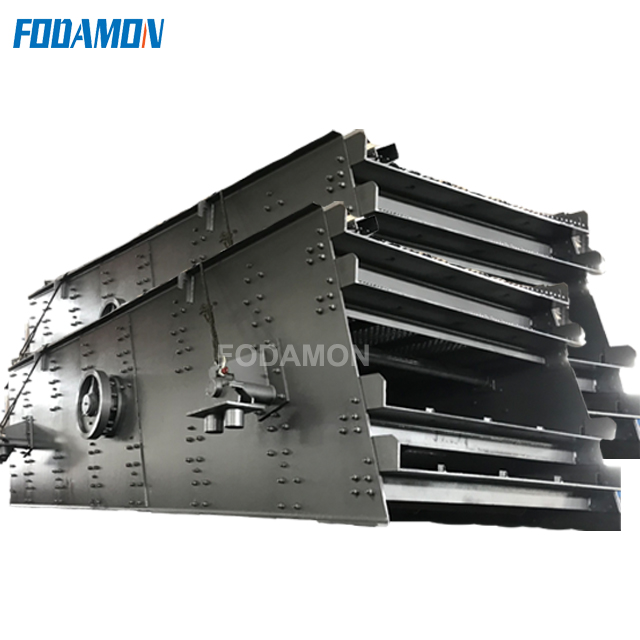
Selecting the right vibrating screen is important for both production efficiency and long-term operating cost. Before choosing a model, the following information should be confirmed:
- ✔ Material type and hardness
- ✔ Feed size
- ✔ Required output size
- ✔ Capacity requirement in TPH
- ✔ Moisture content
- ✔ Number of final product sizes
- ✔ Dry or wet screening condition
- ✔ Installation space and plant layout
For example, a limestone crushing plant may require a different screen configuration from a basalt or granite crushing plant. Limestone is usually easier to crush, while basalt and granite are harder and more abrasive. Therefore, screen mesh material, deck strength, and wear protection should be selected according to actual working conditions.
Common Vibrating Screen Problems and Solutions
Bearing Overheating
Bearing overheating may be caused by poor lubrication, excessive load, contamination, or improper installation. Regular lubrication and inspection are necessary for stable operation.
Screen Mesh Wear
Hard and abrasive materials such as granite, basalt, quartzite, and iron ore may accelerate screen mesh wear. Using wear-resistant screen media can help extend service life.
Low Screening Efficiency
Low screening efficiency may result from improper mesh size, excessive feed volume, high moisture content, or uneven feeding. A stable feeding system and correct screen angle are important.
Abnormal Vibration
Loose bolts, damaged springs, unbalanced exciters, or worn bearings can cause abnormal vibration. Operators should stop the machine for inspection if unusual noise or vibration appears.
Vibrating Screen in a Complete Crushing Plant
A vibrating screen is rarely used alone in large-scale production. It usually works together with feeding, crushing, conveying, and sometimes washing equipment.
- 🔗 Vibrating Feeder – feeds materials evenly into the crusher.
- 🔗 Jaw Crusher – performs primary crushing.
- 🔗 Impact Crusher – produces good particle shape for medium-hard materials.
- 🔗 Cone Crusher – suitable for hard rock secondary and tertiary crushing.
- 🔗 Sand Making Machine – produces manufactured sand.
- 🔗 Mobile Crusher Plant – provides flexible crushing and screening solutions.
Fodamon Vibrating Screen Solution
Fodamon provides high-performance vibrating screens for mining, quarrying, aggregate production, industrial mineral processing, and construction material plants. Our screening equipment is designed to deliver reliable classification, high screening efficiency, and long service life under demanding working conditions.
Our vibrating screens are suitable for a wide range of materials, including limestone, granite, basalt, cobblestone, quartzite, barite, gypsum, magnetite, hematite, coal gangue, quartz sand, and other minerals and aggregates.
Based on material characteristics, feed size, required output size, production capacity, moisture content, and plant layout, Fodamon can recommend the most suitable vibrating screen configuration and provide complete crushing and screening solutions tailored to your project requirements.
Need a Screening Solution?
To recommend a suitable vibrating screen, please provide your material name, feed size, required output size, capacity, and working site conditions. Fodamon can help design a practical and economical screening solution for your project.
Frequently Asked Questions
What is the purpose of a vibrating screen?
A vibrating screen is used to separate materials into different particle sizes. It improves crushing efficiency, controls final product size, and reduces unnecessary re-crushing.
What materials can be screened by a vibrating screen?
Vibrating screens can process granite, basalt, limestone, cobblestone, quartzite, marble, barite, gypsum, coal, iron ore, gold ore, construction waste, and many other materials.
What is the difference between circular and linear vibrating screens?
Circular vibrating screens are commonly used in mining and aggregate production, while linear vibrating screens are often used for fine material classification, dewatering, and coal processing.
How do I choose the correct screen mesh size?
The screen mesh size should be selected according to the required final product size, material type, moisture content, and production capacity.
Can a vibrating screen be used in a mobile crushing plant?
Yes. Vibrating screens can be integrated into mobile crushing plants to provide flexible on-site crushing and screening solutions.