

Double Roll Crusher
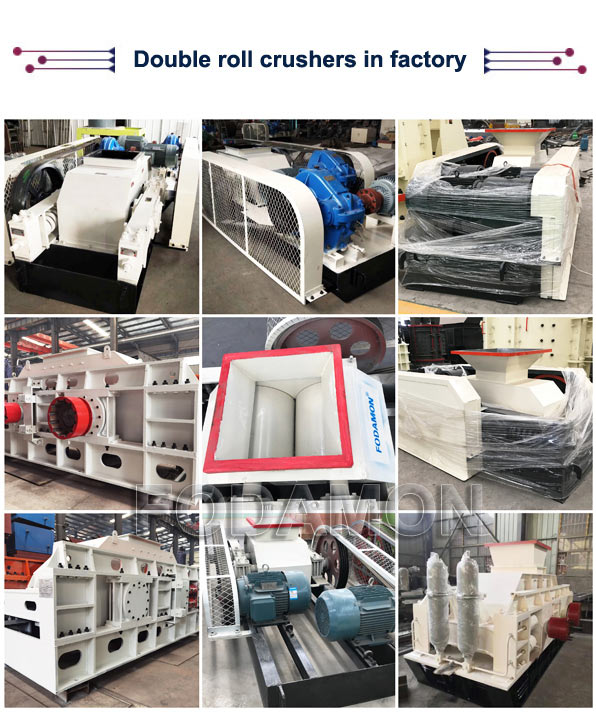
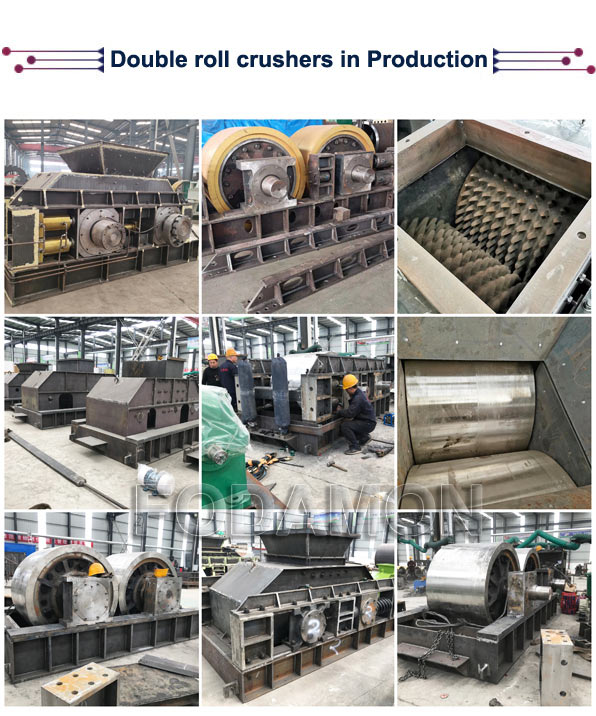
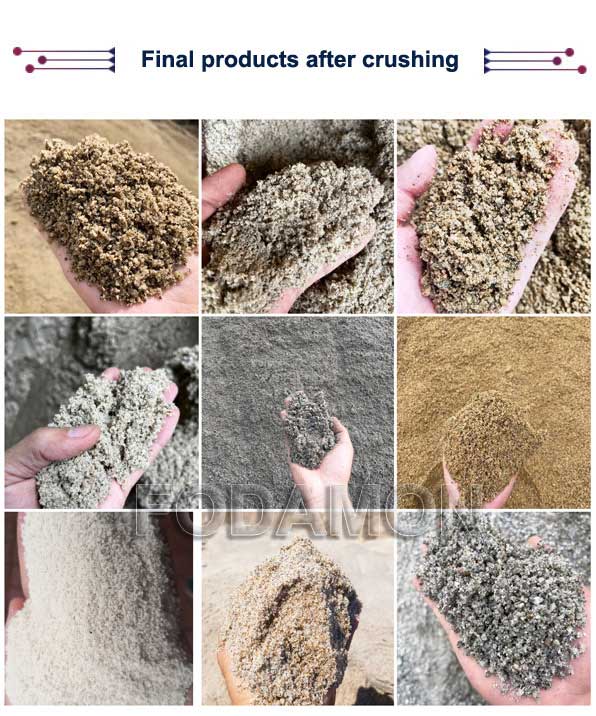
Double roll crusher is a time-tested crushing equipment with a mature manufacturing process. It features a simple structure, low over-crushing rate, and flexible roller design. The tooth shape, size, and arrangement can be customized according to different materials. It’s widely used for medium and fine crushing of soft and medium-hard ores. In sulfuric acid plants, it’s often used to crush pyrite: first to 20–30mm, then further to below 5mm to meet furnace requirements.
- Flexible Roller Design – Adjustable tooth shape and spacing
- Low Over-Crushing – Reduces fines and preserves target size
- Easy Maintenance – Simple structure for quick servicing
Tell us your material type, feeding size and required capacity. Our engineers can recommend a suitable double roll crusher solution for your crushing project.

 Working Principle of Double roll crusher
A roll crusher crushes using compression, with two rolls rotating about a shaft, towards the gap between the rolls. The gap between the rolls is set to the size of product desired, with the realization that the largest feed particle can only be 4 times the gap dimension. The particles are drawn into the gap between the rolls by their rotating motion and a friction angle formed between the rolls and the particle, called the nip angle. The two rolls force the particle between their rotating surface into the ever smaller gap area, and it fractures from the compressive forces presented by the rotating rolls.
 Performance advantage of Double roll crusher
1. The crushing of the roller crusher is relatively large. When a large crushing ratio is required, the roller crusher can be equipped with an adjustable crushing bar under the two rollers.
2. The roller crusher has a simple structure and a modular structure, which can be installed separately or in combination.
3. It adopts combined crushing instead of impact and striking to break, and does not cause secondary crushing, so the over-grinding rate is extremely low.


Technical data of Double smooth roll crusher
| Model | Feeding size (mm) |
Discharge size (mm) |
Capacity (t/h) |
Power (kw) |
Weight (t) |
Overall size (LxWxH)(mm) |
| 2PG400×250 | <35 | ≤2-8 | 2-10 | 2×5.5 | 1.3 | 2150×980×800 |
| 2PG400×400 | <35 | ≤2-8 | 5-12 | 2×7.5 | 2.3 | 2360×1100×800 |
| 2PG610×400 | <65 | ≤2-20 | 5-20 | 2×15 | 3.9 | 3510×1420×1030 |
| 2PG750×500 | <75 | ≤2-25 | 10-40 | 2×18.5 | 9.5 | 4210×1630×1260 |
| 2PG800×600 | <80 | ≤2-25 | 12-45 | 2×22 | 10.8 | 4505×1780×1320 |
| 2PG1000×700 | <100 | ≤3-30 | 20-65 | 2×30 | 14.9 | 5310×2175×1595 |
| 2PG1200×800 | <120 | ≤3-35 | 35-80 | 2×37 | 25.5 | 6290×2270×1870 |
| 2PG1500×800 | <130 | ≤3-45 | 50-120 | 2×75 | 33.7 | 7460×2410×2290 |
| 2PG1600×1000 | <150 | ≤3-50 | 60-140 | 2×90 | 41.2 | 8220×2680×2475 |
Technical data of Double teeth roll crusher
| Model | Max. Feeding size (mm) | Discharge size (mm) |
Capacity (t/h) |
Power(kw) | Weight (kg) |
Overall size (L×W×H)(mm) |
| 2PGC400×250 | 80-100 | 10-50 | 7-15 | 5.5×2 | 1300 | 2400×950×650 |
| 2PGC400×400 | 180-260 | 10-50 | 15-30 | 7.5×2 | 1800 | 2400×1250×650 |
| 2PGC450×500 | 300-500 | 15-100 | 30-60 | 7.5×2 | 3800 | 2660×1900×826 |
| 2PGC600×750 | 300-600 | 20-120 | 60-100 | 11×2 | 7200 | 2780×3065×1310 |
| 2PGC600×900 | 300-600 | 30-150 | 80-120 | 18.5×2 | 7800 | 4500×1900×1350 |
| 2PGC900×900 | 600-900 | 30-200 | 150-200 | 22×2 | 13500 | 4100×2200×1550 |
| 2PGC900×1200 | 700-950 | 30-200 | 180-220 | 37×2 | 18800 | 5823×2420×1635 |
| 2PGC1200×1500 | 800-1050 | 30-200 | 200-300 | 55×2 | 52000 | 7010×4500×2050 |
Note: This is just reference. Please contact us to get price and details.
Double Roll Crusher Technical FAQ
Q1: What are the main factors affecting the capacity of a double roll crusher?
A: The production capacity is mainly determined by three core factors: the width and diameter of the rollers, and the discharge gap setting. Additionally, the material’s hardness, moisture content, and feed size distribution also significantly impact the final output.
Q2: How to adjust the output size of the double roll crusher?
A: You can easily adjust the discharge opening by adding or removing shims (gaskets) or by adjusting the wedge device located behind the movable roller. This allows for precise control over the final product size to meet different project requirements.
Q3: How often should the roller skins be replaced?
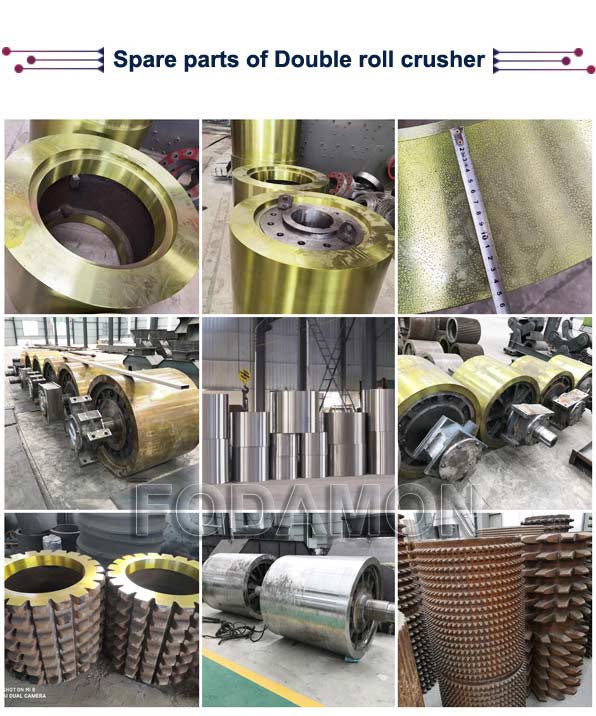
A: Replacement frequency depends on the abrasiveness of the material being crushed. For highly abrasive materials like iron ore or quartz, we recommend a thorough inspection every 3-6 months. Using high-manganese steel roller skins can significantly extend the service life.
Package
Packaged with exporting wooden/plywood case. And the package can be customized.
Packing Photos

Loading the cabinet
