
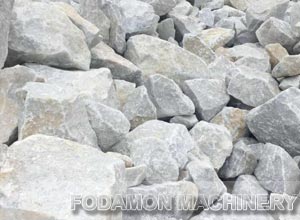
Marble Crushing and Powder Processing Solution
Marble is a metamorphic rock mainly composed of calcite, dolomite, or calcium carbonate minerals. It is widely used in construction, decoration, flooring, wall cladding, landscaping, artificial stone, terrazzo aggregate, and industrial powder production. Because marble has good texture, natural color, and relatively moderate hardness, it has both decorative value and industrial processing value.
Marble processing can include crushing, screening, sand making, grinding, classification, and powder collection. Large marble blocks can be processed into decorative aggregate or construction stone, while marble powder can be used as calcium carbonate filler in paint, coating, plastic, rubber, paper, wall putty, artificial stone, and building materials.
Marble Material Characteristics
- Calcium Carbonate-Based Stone – Marble is mainly composed of calcite or dolomite minerals and is suitable for calcium carbonate powder production.
- High Decorative Value – Natural patterns and colors make marble suitable for construction, interior design, landscaping, and decorative aggregate.
- Moderate Hardness – Compared with granite or quartzite, marble is easier to crush and grind, reducing equipment wear in many applications.
- Suitable for Powder Processing – Marble can be processed into fine powder for fillers, coatings, plastics, paper, rubber, and artificial stone.
Marble Crushing Process
Marble crushing usually includes primary crushing, secondary crushing, screening, and sometimes shaping or sand making. Large marble rocks can be first reduced by jaw crusher, then processed by impact crusher or hammer crusher according to the final product size and application.
For decorative aggregate or terrazzo aggregate, particle shape and size uniformity are important. A proper crushing and screening system can help produce clean and stable marble aggregate for construction, landscaping, and architectural applications.
Typical Marble Crushing Flow
Raw Marble → Jaw Crusher → Impact Crusher / Hammer Crusher → Vibrating Screen → Finished Marble Aggregate
Marble Powder Processing
Marble powder production is one of the most important processing directions for marble resources. After crushing, marble particles can be ground by Raymond mill or ball mill and classified into different powder fineness grades. The finished marble powder is widely used as calcium carbonate filler in many industries.
For medium-fine marble powder, Raymond mill is usually a practical and economical choice. For finer powder or larger continuous production capacity, ball mill and classifier systems can be selected.
Typical Marble Powder Processing Flow
Marble Chips → Crushing → Raymond Mill / Ball Mill → Classifier → Dust Collection → Finished Marble Powder
Recommended Equipment for Marble Processing
1. Jaw Crusher for Primary Marble Crushing
The jaw crusher can be used for primary marble crushing. It reduces large marble rocks or quarry waste into smaller sizes suitable for secondary crushing, screening, or grinding preparation.
2. Impact Crusher for Marble Aggregate Shaping
The impact crusher is suitable for marble aggregate production when better particle shape is required. It can help produce decorative aggregate, paving stone, and construction material with improved cubic shape.
3. Hammer Crusher for Brittle Marble Crushing
The hammer crusher can be used for medium and fine crushing of brittle marble materials. It is suitable for marble chips, small stones, and powder production preparation.
4. Raymond Mill for Marble Powder Production
The Raymond mill is widely used for marble powder production. It can produce medium-fine calcium carbonate powder for paint, coating, plastic, rubber, paper, wall putty, and construction filler applications.
5. Ball Mill for Fine Marble Grinding
The ball mill can be selected when finer marble powder or larger grinding capacity is required. It can work together with classifiers for precise powder fineness control.
6. Vibrating Screen and Belt Conveyor
The vibrating screen is used to classify crushed marble into different particle sizes, while the belt conveyor helps transport materials between crushing, screening, grinding, storage, and packaging stages.
Applications of Processed Marble
- Construction Stone – Used for building stone, wall cladding, flooring, paving, and architectural decoration.
- Landscaping and Decorative Aggregate – Used in garden stone, decorative gravel, terrazzo aggregate, and outdoor landscape design.
- Paints and Coatings – Marble powder can be used as calcium carbonate filler to improve brightness and product stability.
- Plastic, Rubber and Paper – Used as industrial filler to improve product performance and reduce raw material cost.
- Wall Putty and Artificial Stone – Used in dry-mix materials, artificial marble, artificial stone, and construction fillers.
Marble Resources in Southeast Asia
Marble resources are widely found in several Southeast Asian countries, supporting local construction, decorative stone, and calcium carbonate powder industries. Vietnam is one of the important marble-producing countries in the region, with white and grey marble resources in areas such as Yen Bai, Nghe An, and Thanh Hoa. These materials are used for slabs, tiles, decorative stone, and powder production.
Thailand also has marble resources used in construction, decoration, and interior materials. Malaysia, especially areas with limestone and carbonate rock resources such as Perak, has strong potential for calcium carbonate and marble-related powder processing. Indonesia and the Philippines also have marble and decorative stone resources used for local construction, landscaping, and architectural projects.
These regional marble resources create demand for crushing, screening, grinding, and powder production equipment. For many small and medium plants in Southeast Asia, flexible equipment configuration is important because the final products may include stone chips, decorative aggregate, marble powder, or construction fillers.
Marble Aggregate and Decorative Stone Production
Marble aggregate can be used in terrazzo, decorative concrete, landscaping, paving, and garden stone applications. Compared with common grey aggregate, marble can provide higher visual value because of its natural color and texture.
For decorative aggregate production, the crushing process should focus on particle size uniformity, clean classification, and reduced excessive fines. Screening and washing can be added when cleaner aggregate is required.
Marble Powder Fineness and Industrial Use
Marble powder fineness should be selected according to the final application. Coatings, plastics, rubber, paper, wall putty, and artificial stone may require different powder sizes, whiteness, and purity levels. A suitable grinding and classification system helps maintain stable powder quality.
Fodamon can help customers choose Raymond mill, ball mill, classifier, and dust collection systems according to powder fineness, capacity, and industrial use.
How to Choose a Marble Processing Plant
Choosing a suitable marble processing plant depends on raw material size, hardness, moisture content, required final aggregate size or powder fineness, production capacity, and final application. For decorative aggregate, crushing and screening are important. For powder production, grinding, classification, and dust collection are the core processes.
Information Needed Before Equipment Selection
- Raw marble feeding size
- Required final aggregate size or powder fineness
- Expected production capacity per hour
- Application: decorative aggregate, terrazzo, construction stone, wall putty, coating, plastic, rubber, paper, or artificial stone
- Whiteness, purity, and moisture condition
- Plant layout, power condition, storage, and packaging requirements
FAQ About Marble Processing
What is marble mainly used for?
Marble is used for construction stone, flooring, wall cladding, decorative aggregate, terrazzo, landscaping, artificial stone, calcium carbonate powder, paints, coatings, plastics, rubber, paper, and wall putty.
Which crusher is suitable for marble?
Jaw crusher is suitable for primary marble crushing. Impact crusher and hammer crusher can be used for secondary crushing, aggregate shaping, and powder production preparation.
Can marble be ground into powder?
Yes. Marble can be ground into calcium carbonate powder by Raymond mill or ball mill for coatings, plastics, rubber, paper, wall putty, and industrial filler applications.
Is marble harder than granite?
No. Marble is generally softer than granite and quartzite, which makes it easier to crush and grind in many processing projects.
What equipment is needed for a marble powder plant?
A typical marble powder plant may include crusher, Raymond mill or ball mill, classifier, dust collector, belt conveyor, storage silo, and packaging system.
Need a Marble Crushing or Powder Processing Solution?
Tell us your raw marble size, required final aggregate size or powder fineness, production capacity, and final application. Fodamon can help you design a suitable marble crushing, screening, grinding, classification, and powder collection system.
Contact Fodamon today to get a customized marble processing solution.
Need a Marble Crushing or Powder Processing Solution?
Tell us your raw marble size, required final aggregate size or powder fineness, production capacity, and final application. Fodamon can help you design a suitable marble crushing, screening, grinding, classification, and powder collection system.
Contact Fodamon today to get a customized marble processing solution.