
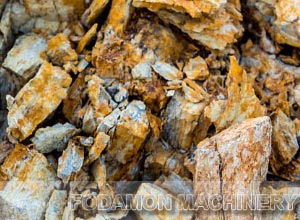
Xenotime Beneficiation and Rare Earth Mineral Processing Solution
Xenotime is a rare phosphate mineral mainly composed of yttrium phosphate (YPO₄), often containing valuable heavy rare earth elements such as yttrium, dysprosium, erbium, ytterbium, and other lanthanides. It is one of the important rare earth minerals used in advanced materials, electronics, high-performance magnets, laser technology, aerospace components, and high-temperature industrial applications.
Xenotime is usually found in granitic pegmatites, heavy mineral sands, placer deposits, and some metamorphic rocks. Because xenotime often occurs together with monazite, zircon, ilmenite, rutile, and quartz sand, proper crushing, grinding, classification, gravity separation, magnetic separation, and flotation processes are important for mineral recovery and concentrate quality improvement.
Due to its relatively high value and complex mineral association, xenotime processing requires stable crushing and beneficiation systems to improve rare earth recovery efficiency while reducing unnecessary mineral loss during grinding and separation.
Xenotime Mineral Characteristics
- Rare Earth Mineral Resource – Xenotime is an important source of yttrium and heavy rare earth elements used in advanced industrial technologies.
- Dense Mineral Structure – Xenotime has relatively high density and is suitable for gravity and magnetic separation processes.
- Strategic Industrial Value – Rare earth concentrates from xenotime are widely used in electronics, renewable energy, aerospace, and precision manufacturing industries.
- Complex Mineral Association – Xenotime is often associated with zircon, monazite, quartz, rutile, and heavy mineral sands, requiring multiple beneficiation stages.
Xenotime Processing Overview
Xenotime processing generally begins with crushing and grinding to liberate rare earth-bearing particles from gangue minerals. Depending on ore type and deposit characteristics, the beneficiation process may include screening, gravity separation, magnetic separation, electrostatic separation, flotation, or combined concentration methods.
In placer or heavy mineral sand deposits, xenotime is often separated together with zircon and monazite using gravity concentration equipment. In hard rock deposits, crushing and grinding become more important to achieve suitable mineral liberation before downstream separation.
Typical Xenotime Processing Flow
Raw Xenotime Ore → Vibrating Feeder → Jaw Crusher → Grinding Mill → Classifier → Gravity Separation / Magnetic Separation → Rare Earth Concentrate
Recommended Equipment for Xenotime Processing
1. Jaw Crusher for Primary Crushing
The jaw crusher is commonly used to reduce large xenotime-bearing rocks into smaller particles suitable for grinding and beneficiation preparation.
2. Ball Mill for Mineral Liberation
The ball mill is widely used for xenotime grinding. Proper grinding helps liberate xenotime particles from quartz, feldspar, zircon, and other associated minerals before separation.
3. Magnetic Separation Equipment
Xenotime often shows weak magnetic properties, making magnetic separation an important stage for concentrate upgrading and impurity reduction in rare earth processing plants.
4. Gravity Separation System
Due to its relatively high density, xenotime can be concentrated using gravity separation equipment such as shaking tables, spiral concentrators, or centrifugal concentrators in some mineral sand projects.
5. Classifier and Screening Equipment
Classification systems help control particle size before separation stages, improving mineral recovery efficiency and downstream concentrate quality.
Applications of Xenotime and Rare Earth Minerals
Rare earth elements extracted from xenotime play an increasingly important role in modern technology and strategic industrial development.
- Electronics and semiconductor industries
- High-performance permanent magnets and renewable energy systems
- Aerospace materials and advanced engineering applications
- Laser materials, phosphors, and optical technology
- Rare earth metallurgy and advanced industrial manufacturing
Heavy Mineral Sand and Xenotime Recovery
In some coastal or placer deposits, xenotime is recovered together with zircon, rutile, ilmenite, and monazite from heavy mineral sands. These deposits often require combined gravity, magnetic, and electrostatic separation processes to improve concentrate grade and recovery efficiency.
Because rare earth minerals are usually fine-grained and closely associated with gangue minerals, proper grinding fineness and stable classification systems are critical for efficient separation.
How to Choose a Xenotime Processing Plant
A suitable xenotime processing plant should be designed according to ore type, associated minerals, rare earth content, required concentrate grade, and production capacity. Hard rock xenotime deposits may require crushing and grinding systems, while placer deposits may focus more on gravity and magnetic separation.
Fodamon engineers can help customers select suitable crushing, grinding, screening, and beneficiation equipment according to mineral characteristics and project requirements.
Information Needed Before Equipment Selection
- Ore type and mineral composition
- Rare earth content and concentrate requirement
- Raw feeding size and grinding fineness
- Associated minerals and impurity condition
- Expected processing capacity
- Plant layout and available power condition
- Beneficiation method preference
FAQ About Xenotime Processing
What is xenotime used for?
Xenotime is mainly used as a source of yttrium and heavy rare earth elements for electronics, aerospace, renewable energy, magnets, and advanced industrial applications.
Does xenotime require grinding before separation?
Yes. Proper grinding is important to liberate xenotime particles from associated gangue minerals before gravity, magnetic, or flotation separation.
Can xenotime be separated by gravity concentration?
Because xenotime has relatively high density, gravity separation methods such as shaking tables and spiral concentrators can be used in some deposits.
What minerals are commonly associated with xenotime?
Xenotime is often associated with zircon, monazite, ilmenite, rutile, quartz, and other heavy mineral sands or granitic minerals.
Which equipment is commonly used for xenotime processing?
Jaw crusher, ball mill, classifier, magnetic separator, gravity concentrator, and screening equipment are commonly used in xenotime beneficiation plants.
Need a Xenotime Beneficiation Solution?
Tell us your ore type, rare earth content, required concentrate grade, grinding fineness, and processing capacity. Fodamon can help you design a customized xenotime crushing, grinding, and beneficiation solution for rare earth mineral recovery.
Contact Fodamon today to get a professional rare earth mineral processing solution.