
A Brief History in Every Rotation
The concept of the gear has been with humanity for centuries—appearing in the intricate mechanisms of the Antikythera device from Ancient Greece and later refined by pioneers like Leonardo da Vinci.
But the birth of the girth gear, as we recognize it today—a massive toothed ring transmitting torque in rotary systems—can be traced back to the Industrial Revolution.
James Watt’s innovations in rotary motion laid the foundation for steam-driven mechanical systems. Over time, advancements in metallurgy and machining allowed engineers to scale gear systems for heavy-duty industrial use. By the mid-20th century, girth gears became critical components in rotary kilns, ball mills, and rotary dryers across the globe—quietly driving entire industries forward.
Today’s Dispatch: A Scene from Our Workshop
In a quiet but meticulously organized corner of our facility, a set of girth gears and matching pinions await shipment.
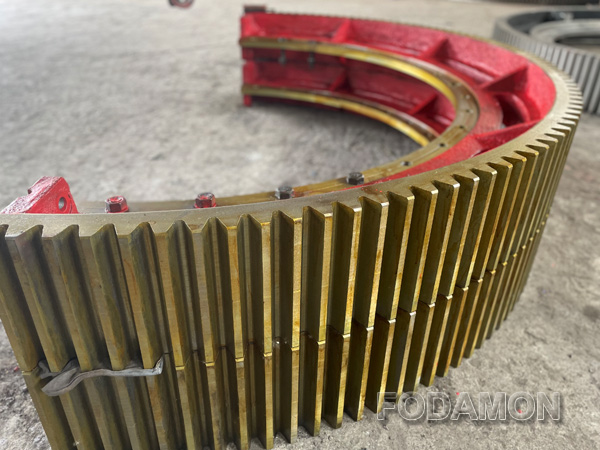
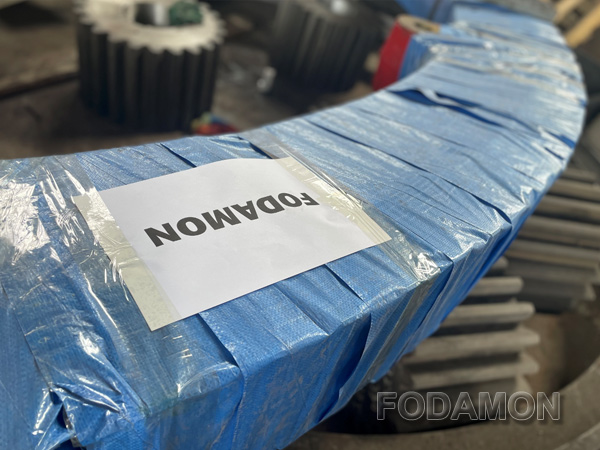
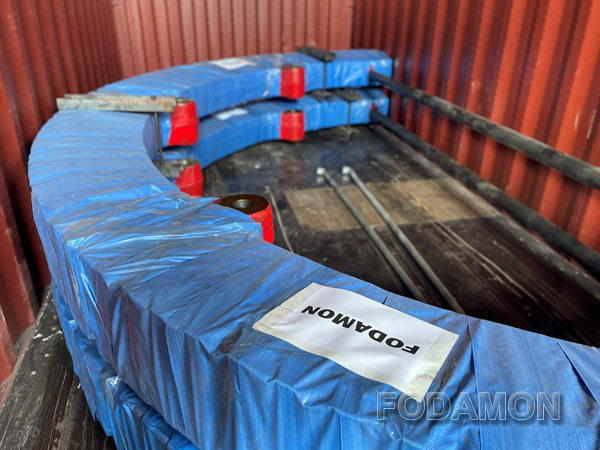
They’re not exposed to the dust of the shop floor. Instead, they’re carefully wrapped in deep blue protective fabric, each accompanied by branded documentation ensuring proper identification. These aren’t just spare parts; they’re a signal of preparedness, of forethought, of a company aligning maintenance with vision—as explored in our previous overview of custom-cast girth gears and pinions for rotary kilns, ball mills, and dryers.
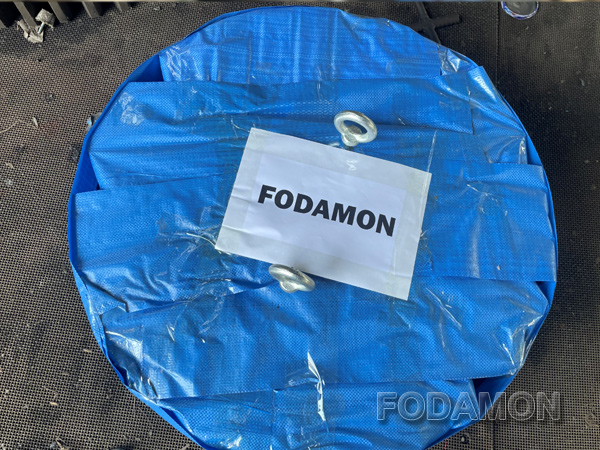
Two large gears. Two smaller pinions. All intended for one customer: a rotary dryer operator who isn’t just maintaining a machine—but managing continuity.
Decisions Behind the Shipment: A Manager’s Story
To the casual observer, this might look like a routine order. But for the project manager or general manager on the client’s side, this shipment is the result of strategic planning.
Replacing the main drive components of a rotary dryer isn’t a simple transaction. It requires:
- Precise timing: Choosing a maintenance window that minimizes operational disruption. Often, this means aligning gear replacement with seasonal slowdowns or national holidays.
- Inventory forecasting: Ensuring that the finished goods warehouse is sufficiently stocked before the scheduled downtime, so that customer orders continue to be fulfilled during the offline period.
- Data-driven decisions: Analyzing past sales data, historical failure rates, and even future projections to schedule maintenance in a way that supports—not interrupts—growth.
In many ways, the gear isn’t the focus. But choosing the right girth gear for your rotary equipment lays the mechanical foundation for everything else that follows. The thinking behind it is.
The Human Geometry of Timing and Trust
A gear transfers force through teeth—simple, mechanical. But behind every gear replacement is a more delicate transmission: one of trust, discipline, and anticipation.
What we ship is a gear.
What our clients manage is continuity.
And what connects us both is a shared belief that foresight is the quietest—but most powerful—form of leadership.