
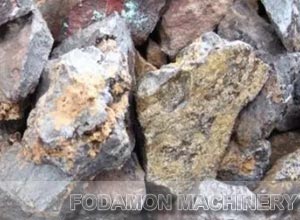
Pyrite Ore Crushing and Grinding Processing Solution
Pyrite, commonly known as fool’s gold, is an iron sulfide mineral with the chemical composition FeS₂. It has a metallic luster and pale brass-yellow color, making it visually similar to gold. In industrial processing, pyrite is often associated with gold ore, copper ore, lead-zinc ore, coal, and other sulfide mineral deposits.
Although pyrite itself is not usually processed as a mainstream construction material, it plays an important role in mineral beneficiation, sulfur production, acid-related industrial applications, and the separation of valuable associated minerals. For many mining projects, proper pyrite crushing, grinding, and classification are essential before flotation, magnetic separation, or further mineral processing.
Fodamon can provide suitable crushing and grinding equipment for pyrite ore processing according to raw ore size, ore hardness, required fineness, processing capacity, and downstream beneficiation method.
Pyrite Mineral Characteristics
- Metallic Sulfide Mineral – Pyrite is an iron sulfide mineral often found together with gold, copper, lead, zinc, and other sulfide ores.
- Relatively High Hardness – Pyrite has good brittleness and moderate-to-high hardness, requiring stable crushing and grinding equipment.
- Important in Beneficiation – Proper liberation of pyrite particles is important for flotation, sulfur recovery, and separation from valuable minerals.
- Associated Ore Value – Pyrite processing is often part of gold ore, copper ore, polymetallic ore, and coal cleaning projects.
Pyrite Processing Overview
Pyrite ore processing usually begins with size reduction. Large pyrite-bearing rocks are first crushed by a jaw crusher, then further reduced by cone crusher or impact crusher depending on ore hardness and production requirements. After crushing, the material may enter a ball mill for grinding to achieve suitable particle liberation before beneficiation.
Because pyrite is commonly associated with other minerals, the processing route should be selected according to the target mineral. For example, in gold ore processing, pyrite may contain fine gold particles and requires careful grinding and separation. In copper or lead-zinc sulfide ore, pyrite may need to be separated from valuable sulfide minerals through flotation.
Typical Pyrite Ore Processing Flow
Raw Pyrite Ore → Vibrating Feeder → Jaw Crusher → Cone Crusher / Impact Crusher → Vibrating Screen → Ball Mill → Classifier → Flotation / Separation Process
Recommended Equipment for Pyrite Processing
1. Jaw Crusher for Primary Pyrite Crushing
The jaw crusher is commonly used as the first-stage crushing machine for pyrite ore. It can handle large pyrite-bearing rocks and reduce them into smaller sizes suitable for secondary crushing or grinding preparation.
2. Cone Crusher for Medium and Fine Crushing
For relatively hard pyrite ore, the cone crusher is suitable for secondary and fine crushing. It provides stable output size, strong crushing force, and continuous operation for mineral processing plants.
3. Impact Crusher for Brittle Ore Crushing
When the pyrite-bearing material is brittle or the project requires flexible medium crushing, the impact crusher can also be selected. It is suitable for certain ore processing lines where particle shape and reduction ratio are important.
4. Ball Mill for Pyrite Grinding
The ball mill is widely used for grinding pyrite ore after crushing. Grinding helps liberate pyrite particles from gangue minerals or associated valuable minerals, which is necessary for flotation and other beneficiation processes.
5. Vibrating Screen and Classifier
Screening and classification equipment help control particle size before grinding or separation. Oversized material can be returned to the crusher, while qualified particles enter the next processing stage.
Pyrite Ore Beneficiation Considerations
In many mining projects, pyrite is not processed alone. It often appears as an associated mineral in gold, copper, lead-zinc, and coal-related deposits. Therefore, the purpose of pyrite processing may be different from project to project.
- Gold-Associated Pyrite – Some gold ores contain fine gold particles locked in pyrite, requiring proper grinding and flotation treatment.
- Copper and Lead-Zinc Ore – Pyrite may need to be separated from valuable sulfide minerals to improve concentrate quality.
- Sulfur Recovery – In some industrial applications, pyrite can be processed as a sulfur-bearing raw material.
- Environmental Control – Pyrite oxidation may generate acidic drainage, so proper handling and process design are important.
Applications of Pyrite Processing
Processed pyrite and pyrite-bearing ores can be involved in different industrial and mineral processing applications. The final use depends on ore composition, beneficiation result, and local industrial requirements.
- Sulfide ore beneficiation and flotation preparation
- Gold ore, copper ore, and polymetallic ore processing
- Sulfur-related industrial raw material processing
- Separation of pyrite from coal or other associated minerals
How to Choose a Pyrite Processing Line
A suitable pyrite processing line should be designed based on the ore’s physical properties and beneficiation purpose. The key factors include feeding size, ore hardness, moisture content, required grinding fineness, processing capacity, and whether the project focuses on pyrite recovery, gold liberation, sulfide separation, or gangue removal.
For primary crushing, jaw crusher is usually recommended. For secondary crushing, cone crusher is suitable for harder pyrite ore, while impact crusher may be used for brittle materials. If fine mineral liberation is required, ball mill grinding and classification should be included before flotation or separation.
Information Needed for Equipment Selection
- Raw pyrite ore size
- Required final particle size or grinding fineness
- Processing capacity per hour
- Ore hardness and moisture condition
- Target mineral or beneficiation purpose
- Available site space and power condition
FAQ About Pyrite Processing
Is pyrite the same as gold?
No. Pyrite is commonly called fool’s gold because of its metallic luster and yellowish color, but it is an iron sulfide mineral. However, some gold deposits may contain gold associated with pyrite, which makes proper grinding and separation important.
Which crusher is suitable for pyrite ore?
A jaw crusher is commonly used for primary pyrite crushing. For secondary crushing, cone crusher is suitable for harder ore, while impact crusher may be used for brittle pyrite-bearing material.
Does pyrite need grinding before flotation?
In most beneficiation projects, grinding is required to liberate pyrite particles from other minerals. A ball mill is commonly used before flotation or other separation processes.
Can pyrite be processed together with gold ore?
Yes. In some gold ore deposits, fine gold may be associated with pyrite. Proper crushing, grinding, and beneficiation are needed to improve gold recovery and concentrate quality.
What should be considered when handling pyrite?
Pyrite can oxidize under certain conditions and may produce acidic drainage. For mining and tailings projects, environmental control and proper process design should be considered.
Need a Pyrite Ore Processing Solution?
Tell us your raw ore size, required output size, processing capacity, grinding fineness, and beneficiation purpose. Fodamon can help you design a suitable pyrite crushing and grinding solution for sulfide ore, gold-associated ore, copper ore, lead-zinc ore, and other mineral processing projects.
Contact Fodamon today to get a customized pyrite ore processing solution.