
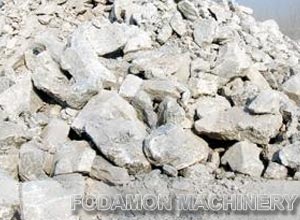
Gypsum Powder Processing Solution
Gypsum is an important non-metallic mineral mainly composed of calcium sulfate. It is widely used in construction materials, gypsum board production, plaster powder, cement retarder, wall putty, agricultural soil improvement, and industrial filler applications. Because gypsum has stable chemical properties and good processing value, it is one of the most common raw materials in the building materials industry.
Gypsum processing usually includes crushing, drying, grinding, classification, and powder collection. Different applications require different powder fineness and moisture control. Fodamon can provide suitable gypsum crushing, drying, and grinding equipment according to raw material type, moisture content, required powder fineness, production capacity, and final product application.
Gypsum Material Characteristics
- Soft Non-Metallic Mineral – Gypsum is easier to crush and grind than hard stones such as granite or quartzite.
- High Building Material Value – Widely used in gypsum board, plaster, wall materials, cement, and construction products.
- Moisture Control Required – Natural gypsum and FGD gypsum may require drying before stable grinding and powder collection.
- Suitable for Powder Processing – Raymond mill, ball mill, classifier, and dust collector can form a complete gypsum powder production system.
Gypsum Processing Overview
Gypsum powder processing generally starts with crushing. Large gypsum rocks are reduced into smaller particles by jaw crusher or hammer crusher. If the raw gypsum contains high moisture, a rotary dryer can be used before grinding. After drying, gypsum is ground by Raymond mill or ball mill and classified into the required powder fineness.
For gypsum powder production, stable fineness, low moisture, and clean powder collection are important. A well-designed processing plant helps improve grinding efficiency, reduce blockage, stabilize product quality, and meet different requirements for construction materials, plaster, cement, and industrial powder applications.
Typical Gypsum Powder Processing Flow
Raw Gypsum → Crushing → Rotary Dryer → Grinding Mill → Classifier → Dust Collection → Finished Gypsum Powder
Recommended Equipment for Gypsum Processing
1. Jaw Crusher for Primary Gypsum Crushing
The jaw crusher can be used for primary crushing of large gypsum rocks. It reduces raw gypsum into smaller sizes suitable for secondary crushing, drying, or grinding preparation.
2. Hammer Crusher for Gypsum Fine Crushing
The hammer crusher is suitable for soft and brittle gypsum materials. It can provide efficient medium and fine crushing before grinding, especially when the required feeding size for the mill is smaller.
3. Rotary Dryer for Natural Gypsum and FGD Gypsum
The rotary dryer is important when gypsum moisture is high. Natural gypsum, desulfurization gypsum, and other wet gypsum materials may require drying before grinding. Proper drying helps reduce stickiness, prevent mill blockage, and improve powder quality.
4. Raymond Mill for Gypsum Powder Production
The Raymond mill is commonly used for gypsum powder production. It is suitable for medium-fine powder processing and can produce stable gypsum powder for plaster, wall putty, gypsum board, cement retarder, and building material applications.
5. Ball Mill for Fine Grinding
The ball mill can be selected when finer gypsum powder, larger continuous grinding capacity, or special industrial powder requirements are needed. It can work together with classifiers for precise particle size control.
6. Classifier and Dust Collection System
Classifiers help control final gypsum powder fineness, while dust collection systems improve powder recovery and working environment. These systems are essential for stable gypsum powder production and clean plant operation.
Natural Gypsum and FGD Gypsum Processing
Gypsum raw materials can come from natural gypsum deposits or industrial by-products such as FGD gypsum from power plant flue gas desulfurization systems. Natural gypsum usually requires crushing and grinding, while FGD gypsum often needs drying because of its higher moisture content.
For FGD gypsum, moisture control is especially important before powder production or building material use. Fodamon can help design drying and grinding systems according to material moisture, output requirement, and final product application.
Applications of Gypsum Powder
Gypsum powder is widely used in many industries. Different applications require different fineness, moisture level, whiteness, and setting performance. Proper processing equipment helps improve product consistency and downstream production quality.
- Gypsum Board Production – Used as the main raw material for gypsum boards, ceiling panels, partition boards, and interior building systems.
- Plaster and Wall Putty – Used for plastering, wall finishing, decorative coatings, and construction surface treatment.
- Cement Retarder – Gypsum is widely used in cement production to control setting time and improve cement performance.
- Agriculture and Soil Improvement – Gypsum can be used to improve soil structure and provide calcium and sulfur nutrients.
- Industrial Filler – Used in fillers, chemical materials, construction additives, and other industrial powder applications.
Gypsum Drying and Moisture Control
Moisture control is one of the key points in gypsum processing. If gypsum moisture is too high, it may cause feeding difficulty, material sticking, low grinding efficiency, and unstable powder quality. A rotary dryer can reduce moisture before grinding and help maintain smooth plant operation.
The drying system should be selected according to raw material moisture, required final moisture, heat source, capacity, and site layout. For wet FGD gypsum, stable drying is often necessary before further grinding, storage, or building material production.
Gypsum Grinding and Powder Fineness
Gypsum grinding equipment should be selected according to the required powder fineness and production capacity. Raymond mill is suitable for many gypsum powder applications because it provides stable fineness, simple operation, and relatively efficient energy consumption.
For finer powder or large-scale industrial production, ball mill and classifier systems can be considered. The final powder fineness should match the requirements of gypsum board, plaster, cement retarder, wall putty, agriculture, or industrial filler applications.
How to Choose a Gypsum Powder Processing Plant
Choosing a suitable gypsum powder processing plant depends on raw material type, feeding size, moisture content, required powder fineness, production capacity, and final application. Natural gypsum may focus more on crushing and grinding, while FGD gypsum often requires drying before grinding or use.
Fodamon engineers can help customers select suitable crushers, dryers, grinding mills, classifiers, and dust collection systems to build a reliable gypsum powder processing plant.
Information Needed Before Equipment Selection
- Raw gypsum type: natural gypsum or FGD gypsum
- Raw material feeding size
- Raw material moisture content
- Required final powder fineness
- Required final moisture content
- Expected production capacity per hour
- Application: gypsum board, plaster, cement, wall putty, agriculture, or industrial filler
- Plant layout, heat source, power condition, and budget range
FAQ About Gypsum Processing
What is gypsum mainly used for?
Gypsum is mainly used for gypsum board, plaster powder, wall putty, cement retarder, construction materials, agriculture, soil improvement, and industrial filler applications.
Does gypsum need drying before grinding?
If gypsum has high moisture, drying is recommended before grinding. This is especially important for FGD gypsum and wet natural gypsum materials.
Which mill is suitable for gypsum powder?
Raymond mill is commonly used for medium-fine gypsum powder production. Ball mill can be selected when finer powder or larger continuous production capacity is required.
Which crusher is suitable for gypsum?
Jaw crusher can be used for primary crushing, while hammer crusher is suitable for soft and brittle gypsum fine crushing before grinding.
What affects gypsum powder quality?
Raw material purity, moisture content, grinding fineness, classification accuracy, drying condition, and dust collection efficiency all affect final gypsum powder quality.
Need a Gypsum Powder Processing Solution?
Tell us your gypsum type, raw material size, moisture content, required powder fineness, production capacity, and final application. Fodamon can help you design a suitable gypsum crushing, drying, grinding, classification, and powder collection system.
Contact Fodamon today to get a customized gypsum powder processing solution.