
Barite
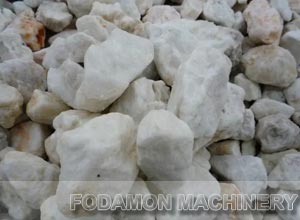
Barite Powder Processing Solution
Barite, also known as baryte, is an important non-metallic mineral mainly composed of barium sulfate (BaSO₄). It has high density, good chemical stability, low hardness, and strong industrial powder value. Barite is widely used in oil and gas drilling, coatings, paints, rubber, plastics, chemical materials, glass, ceramics, and radiation shielding products.
Unlike stone materials mainly used for aggregate production, barite is usually processed into powder. The main processing steps include crushing, feeding, grinding, classification, powder collection, and sometimes drying. Fodamon can provide suitable barite powder processing equipment according to raw ore size, required powder fineness, production capacity, and final application.
Barite Material Characteristics
- High Density Mineral – Barite has high specific gravity, making it especially valuable for drilling mud and weighting material applications.
- Stable Chemical Properties – Barium sulfate has good chemical stability and is widely used in industrial fillers and chemical materials.
- Suitable for Powder Processing – Barite is commonly ground into different fineness grades for industrial powder applications.
- Wide Industrial Use – Barite powder is used in drilling, coatings, plastics, rubber, paints, glass, ceramics, and radiation shielding materials.
Barite Processing Overview
Barite powder processing usually starts with raw ore crushing. Large barite rocks are first reduced by jaw crusher or hammer crusher into smaller sizes suitable for grinding. The crushed material is then fed evenly into the grinding mill through a feeding and conveying system. After grinding, classification equipment separates qualified powder from coarse particles.
Different industries require different barite powder fineness. Oil drilling applications commonly require stable density and particle size, while coatings, plastics, rubber, and chemical fillers may require finer powder and better particle distribution. A well-designed processing plant helps improve powder quality, production efficiency, and final product value.
Typical Barite Powder Processing Flow
Raw Barite Ore → Jaw Crusher / Hammer Crusher → Vibrating Feeder → Grinding Mill → Classifier → Dust Collection → Finished Barite Powder
Recommended Equipment for Barite Processing
1. Jaw Crusher for Primary Barite Crushing
The jaw crusher can be used for primary crushing of large barite rocks. It reduces raw ore into smaller particles suitable for feeding, grinding, and powder production.
2. Hammer Crusher for Soft Barite Fine Crushing
The hammer crusher is suitable for softer and brittle barite materials. It can reduce material size efficiently before grinding and help improve mill feeding performance.
3. Vibrating Feeder for Stable Feeding
The vibrating feeder provides stable and controlled feeding to the grinding system. Uniform feeding helps improve mill efficiency, reduce overload, and maintain stable powder output.
4. Belt Conveyor for Material Transport
The belt conveyor is used to transport crushed barite between crushing, feeding, grinding, and storage systems. Proper conveying design improves plant continuity and reduces manual handling.
5. Raymond Mill for Barite Powder Production
The Raymond mill is one of the most commonly used machines for barite powder production. It is suitable for medium-fine powder processing and can produce barite powder for drilling mud, coatings, paints, rubber, plastics, and filler applications.
6. Ball Mill for Fine Grinding
The ball mill can be selected when finer barite powder, larger continuous grinding capacity, or special particle size requirements are needed. It can work together with classifiers for precise fineness control.
7. Classifier and Dust Collection System
Classification equipment controls final barite powder fineness, while dust collection systems improve powder recovery and working environment. These systems are important for stable powder quality and clean production.
Barite Grinding and Powder Fineness
Barite powder is often produced in different fineness grades according to final application. Common industrial requirements may include 200 mesh, 325 mesh, 400 mesh, or finer powder. The required fineness affects mill selection, classifier configuration, energy consumption, and final powder performance.
Raymond mill is suitable for many standard barite powder applications, while ball mill systems can be used for finer grinding or larger capacity requirements. Fodamon can help customers choose a suitable grinding system according to powder fineness, output capacity, and downstream industry standards.
Applications of Barite Powder
Barite powder is widely used as a high-density industrial mineral powder. Its high specific gravity and chemical stability make it valuable in many industries.
- Oil and Gas Drilling Mud – Barite powder is used as a weighting agent to increase drilling fluid density and control well pressure.
- Paints and Coatings – Used as filler to improve coating density, brightness, chemical stability, and surface performance.
- Rubber and Plastics – Used as an industrial filler to improve product weight, stability, and processing performance.
- Chemical Industry – Used for barium compound production and other chemical material applications.
- Radiation Shielding Materials – High-density barite can be used in radiation shielding concrete and protective materials.
- Glass and Ceramics – Used in glass, ceramic glaze, and special industrial material production.
Barite Powder for Oil and Gas Drilling
Oil and gas drilling is one of the most important applications of barite powder. Because barite has high density, it is widely used as a weighting material in drilling mud. Stable particle size, controlled purity, and consistent density are important for drilling fluid performance.
For drilling-grade barite powder, grinding and classification systems should be designed to meet required fineness and density standards. A stable barite grinding plant helps improve product consistency and support continuous industrial supply.
Barite Powder for Coatings, Rubber and Plastics
In coatings, rubber, and plastics industries, barite powder is used as a functional filler. It can improve product density, chemical resistance, surface smoothness, and mechanical performance. Finer barite powder is often required for high-quality coating and plastic applications.
For these applications, powder fineness, particle distribution, whiteness, and impurity control are important. Proper grinding, classification, and dust collection systems help improve final powder quality.
How to Choose a Barite Powder Processing Plant
Choosing a suitable barite powder processing plant depends on raw ore size, barite grade, required powder fineness, production capacity, moisture content, and final application. For standard industrial powder, Raymond mill is commonly used. For finer powder or large-scale continuous production, ball mill and classifier systems can be considered.
Information Needed Before Equipment Selection
- Raw barite ore feeding size
- Barite grade and impurity condition
- Required final powder fineness
- Expected production capacity per hour
- Application: drilling mud, coating, paint, rubber, plastic, chemical, glass, ceramic, or shielding material
- Moisture content and drying requirement
- Plant layout, power condition, and budget range
FAQ About Barite Processing
What is barite mainly used for?
Barite is mainly used for oil and gas drilling mud, paints, coatings, rubber, plastics, chemical materials, glass, ceramics, and radiation shielding applications.
Which mill is suitable for barite powder production?
Raymond mill is commonly used for medium-fine barite powder production. Ball mill can be selected when finer powder or larger continuous grinding capacity is required.
Does barite need crushing before grinding?
Yes. Large barite rocks should be crushed by jaw crusher or hammer crusher before entering the grinding mill to improve feeding stability and grinding efficiency.
What fineness is common for barite powder?
Common barite powder fineness may include 200 mesh, 325 mesh, 400 mesh, or finer grades depending on drilling, coating, rubber, plastic, or chemical application requirements.
Why are feeder and conveyor important in a barite plant?
Vibrating feeder provides stable feeding to the grinding system, while belt conveyor improves material transport between crushing, grinding, storage, and packaging stages.
Need a Barite Powder Processing Solution?
Tell us your raw barite size, required powder fineness, production capacity, barite grade, and final application. Fodamon can help you design a suitable barite crushing, feeding, grinding, classification, and powder collection system.
Contact Fodamon today to get a customized barite powder processing solution.