
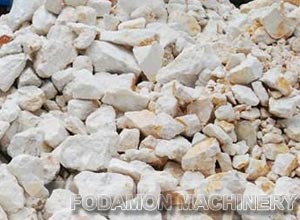
Calcite Raymond Mill Grinding Solution
Calcite is a common calcium carbonate mineral with stable chemical properties, moderate hardness, good whiteness, and wide industrial powder value. It is widely used in coatings, paints, plastics, rubber, paper, construction materials, chemical products, artificial stone, wall putty, and filler applications.
Calcite is one of the classic materials processed by Raymond mill. After crushing and grinding, calcite can be processed into calcium carbonate powder with different fineness levels. Fodamon can provide suitable calcite grinding equipment according to raw material size, required powder fineness, production capacity, and final application.
Calcite Material Characteristics
- Calcium Carbonate Mineral – Calcite is mainly composed of calcium carbonate and is widely used as an industrial mineral filler.
- Ideal for Raymond Mill – Its moderate hardness and stable structure make it suitable for medium-fine powder grinding.
- Wide Powder Applications – Used in paint, coating, plastic, rubber, paper, construction, and chemical industries.
- Good Whiteness and Stability – Properly processed calcite powder has good brightness, low impurity content, and stable performance.
Calcite Grinding Process
Calcite grinding usually starts with raw material crushing. Large calcite rocks are first reduced by jaw crusher or hammer crusher into smaller particles suitable for grinding. The crushed material is then transported into the Raymond mill system through feeding and conveying equipment.
After grinding, the classifier separates qualified powder from coarse particles. Qualified calcite powder is collected by the dust collection system, while coarse particles return to the mill for further grinding. This closed grinding and classification process helps maintain stable powder fineness and production efficiency.
Typical Calcite Raymond Mill Grinding Flow
Raw Calcite → Crushing → Vibrating Feeder → Raymond Mill → Classifier → Dust Collection → Finished Calcite Powder
Recommended Equipment for Calcite Processing
1. Jaw Crusher for Primary Calcite Crushing
The jaw crusher can be used for primary crushing of large calcite rocks. It reduces raw material into smaller sizes suitable for grinding preparation.
2. Hammer Crusher for Soft Calcite Crushing
The hammer crusher is suitable for softer and brittle calcite materials. It can provide efficient medium and fine crushing before grinding, helping improve mill feeding performance.
3. Vibrating Feeder for Stable Mill Feeding
The vibrating feeder provides stable and controlled feeding into the Raymond mill system. Uniform feeding helps improve grinding efficiency, reduce mill fluctuation, and maintain stable powder output.
4. Belt Conveyor for Material Transport
The belt conveyor can transport crushed calcite between crushing, feeding, grinding, storage, and packaging systems. Proper conveying design improves plant continuity and reduces manual handling.
5. Raymond Mill for Calcite Powder Production
The Raymond mill is the core equipment for calcite powder production. It is suitable for medium-fine calcium carbonate powder processing and can produce stable powder for coatings, plastics, rubber, paper, construction fillers, and chemical materials.
6. Ball Mill for Fine Grinding Requirements
The ball mill can be selected when finer calcite powder, larger continuous grinding capacity, or special particle size requirements are needed. It can work together with classifiers for precise fineness control.
7. Classifier and Dust Collection System
Classifiers control the final powder fineness, while dust collection systems improve powder recovery and working environment. These systems are important for high-quality calcite powder production.
Why Calcite is Suitable for Raymond Mill Processing
Calcite has moderate hardness, stable mineral composition, and good grindability, making it highly suitable for Raymond mill processing. Compared with very hard materials, calcite can be ground with lower wear cost and relatively stable energy consumption.
For many industrial powder projects, Raymond mill offers a practical balance between fineness, capacity, investment cost, and operation convenience. This makes it a common choice for calcite powder plants.
Calcite Powder Fineness and Industrial Use
Calcite powder can be produced in different fineness ranges according to application requirements. Common industrial powder may include coarse powder, medium-fine powder, and finer calcium carbonate powder. Different industries may require different whiteness, particle size distribution, and purity.
Paints, coatings, plastics, rubber, paper, wall putty, and construction fillers may each require different powder specifications. A suitable grinding and classification system helps improve final powder consistency and downstream product quality.
Applications of Calcite Powder
- Paints and Coatings – Used as calcium carbonate filler to improve brightness, coverage, and product stability.
- Paper Industry – Used as filler and coating material to improve paper brightness, smoothness, and printability.
- Plastic and Rubber – Used as filler to reduce cost, improve processing performance, and enhance product stability.
- Construction Materials – Used in wall putty, dry mortar, artificial stone, cement products, and building fillers.
- Chemical Materials – Used in calcium carbonate products, industrial fillers, and chemical processing applications.
Calcite Powder Production Line Design
A complete calcite powder production line usually includes crushing, feeding, grinding, classification, dust collection, storage, and packaging. The plant layout should ensure smooth material flow, stable mill feeding, efficient powder collection, and convenient maintenance.
For small and medium powder plants, jaw crusher or hammer crusher, vibrating feeder, Raymond mill, classifier, dust collector, and storage silo can form a practical system. For larger or finer powder projects, ball mill and advanced classification systems can be added.
How to Choose a Calcite Grinding Plant
Choosing a suitable calcite grinding plant depends on raw material size, hardness, moisture content, required powder fineness, production capacity, whiteness requirement, and final application. For standard medium-fine calcium carbonate powder, Raymond mill is often a reliable and economical choice.
Information Needed Before Equipment Selection
- Raw calcite feeding size
- Required final powder fineness
- Expected production capacity per hour
- Whiteness and purity requirement
- Application: coating, paint, plastic, rubber, paper, wall putty, construction filler, or chemical material
- Moisture content and drying requirement
- Plant layout, power condition, storage, and packaging requirements
FAQ About Calcite Grinding
Is calcite suitable for Raymond mill?
Yes. Calcite is one of the common materials processed by Raymond mill. Its moderate hardness and good grindability make it suitable for medium-fine powder production.
Which equipment is used before calcite grinding?
Jaw crusher or hammer crusher can be used to crush large calcite rocks into smaller particles before grinding.
What is calcite powder used for?
Calcite powder is widely used in paints, coatings, plastics, rubber, paper, wall putty, construction materials, artificial stone, and chemical products.
Can ball mill be used for calcite powder?
Yes. Ball mill can be used when finer powder, larger production capacity, or special particle size control is required.
What affects calcite powder quality?
Raw material purity, whiteness, moisture content, grinding fineness, classification accuracy, and dust collection efficiency all affect final calcite powder quality.
Need a Calcite Raymond Mill Grinding Solution?
Tell us your raw calcite size, required powder fineness, production capacity, whiteness requirement, and final application. Fodamon can help you design a suitable calcite Raymond mill grinding plant with crushing, feeding, grinding, classification, dust collection, and powder collection systems.
Contact Fodamon today to get a customized calcite grinding solution.