
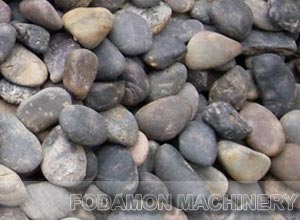
Cobblestone Crushing and Sand Making Solution
Cobblestone is a naturally rounded stone commonly found in riverbeds, ancient gravel deposits, and weathered rock areas. It is usually hard, durable, and resistant to wear, making it suitable for paving, landscaping, road base, concrete aggregate, drainage stone, decorative gravel, and manufactured sand production.
Because cobblestone is often dense and smooth on the surface, its processing plant should focus on stable crushing, efficient screening, particle shape control, and sand making. Fodamon can provide suitable cobblestone crushing, screening, conveying, and sand making solutions according to raw material size, hardness, required output size, capacity, and final application.
Cobblestone Material Characteristics
- Natural Rounded Stone – Cobblestone usually has a rounded shape formed by water erosion or long-term weathering.
- Hard and Durable – Many cobblestones have high hardness and good wear resistance, suitable for aggregate and sand production.
- Good Construction Value – Processed cobblestone can be used for road base, concrete aggregate, paving, drainage, and construction materials.
- Decorative Application – Natural cobblestone is also used for garden paths, landscape design, decorative gravel, and outdoor paving.
Cobblestone Crushing Process
Cobblestone crushing usually includes feeding, primary crushing, secondary crushing, screening, and material conveying. Large cobblestones are first fed into the jaw crusher for coarse crushing. Then the crushed material can be processed by cone crusher or impact crusher depending on hardness and final aggregate shape requirements.
For harder cobblestone, cone crusher is usually recommended for secondary and fine crushing. If the final product requires better particle shape, impact crusher or sand making machine can be added for shaping and fine aggregate production.
Typical Cobblestone Crushing Flow
Raw Cobblestone → Vibrating Feeder → Jaw Crusher → Cone Crusher / Impact Crusher → Vibrating Screen → Belt Conveyor → Finished Aggregate
Cobblestone Sand Making Process
Cobblestone is a high-quality raw material for manufactured sand because of its hardness, durability, and stable mineral structure. After crushing and screening, suitable particles can enter the sand making machine for shaping and fine sand production.
Finished cobblestone manufactured sand can be used for concrete, mortar, road construction, paving materials, drainage systems, and landscaping applications depending on local quality standards.
Typical Cobblestone Sand Making Flow
Crushed Cobblestone → Fine Crushing → Sand Making Machine → Vibrating Screen → Sand Washing Machine → Finished Manufactured Sand
Recommended Equipment for Cobblestone Processing
1. Vibrating Feeder for Stable Feeding
The vibrating feeder feeds raw cobblestone evenly into the crushing system. Stable feeding helps improve crusher efficiency, reduce equipment impact, and maintain continuous production.
2. Jaw Crusher for Primary Cobblestone Crushing
The jaw crusher is commonly used for primary cobblestone crushing. It can handle large and hard stones and reduce them into smaller sizes suitable for secondary crushing and screening.
3. Cone Crusher for Hard Cobblestone Crushing
The cone crusher is suitable for secondary and fine crushing of hard cobblestone. It provides strong crushing force, stable discharge size, and good wear resistance for continuous aggregate production.
4. Impact Crusher for Particle Shape Improvement
The impact crusher can be used when the project requires better particle shape. It helps improve cubic aggregate quality for concrete, road base, paving, and construction material applications.
5. Sand Making Machine for Manufactured Sand
The sand making machine can process crushed cobblestone into high-quality manufactured sand. It is suitable for concrete sand, mortar sand, road sand, paving sand, and fine aggregate production.
6. Vibrating Screen for Size Classification
The vibrating screen classifies crushed cobblestone into different particle sizes. Qualified aggregate is collected as finished product, while oversized material can return to the crusher for further crushing.
7. Belt Conveyor for Continuous Material Transport
The belt conveyor transports materials between feeding, crushing, screening, sand making, washing, and stockpiling stages. Proper conveying design improves production continuity and plant efficiency.
Applications of Processed Cobblestone
- Road base, highway aggregate, and infrastructure material
- Concrete aggregate, construction stone, and foundation material
- Paving stone, outdoor flooring, patios, and pedestrian roads
- Landscaping stone, garden paths, decorative gravel, and water features
- Drainage stone, backfill material, and base course aggregate
- Manufactured sand and fine aggregate production
Cobblestone Aggregate Production Line
A complete cobblestone aggregate production line usually includes vibrating feeder, jaw crusher, cone crusher or impact crusher, vibrating screen, belt conveyor, sand making machine, and sand washing machine. The final configuration depends on raw cobblestone hardness, feeding size, required aggregate size, production capacity, and final product application.
For concrete and road aggregate, particle size distribution and strength are important. For paving and decorative stone, shape and size uniformity are more important. For manufactured sand, sand making and washing equipment help improve sand shape and cleanliness.
How to Choose a Cobblestone Processing Plant
Choosing a suitable cobblestone processing plant depends on raw material size, hardness, abrasiveness, required final aggregate or sand size, production capacity, and final use. For hard cobblestone, jaw crusher and cone crusher are commonly recommended. If better particle shape or manufactured sand is required, impact crusher or sand making machine can be added.
Information Needed Before Equipment Selection
- Raw cobblestone feeding size
- Stone hardness and abrasiveness
- Required final aggregate or sand size
- Expected production capacity per hour
- Application: road base, concrete, paving, landscaping, drainage, or manufactured sand
- Moisture condition, clay content, and washing requirement
- Site layout, power condition, and budget range
FAQ About Cobblestone Processing
What is cobblestone mainly used for?
Cobblestone is mainly used for paving, landscaping, road base, concrete aggregate, drainage stone, decorative gravel, outdoor flooring, garden paths, and manufactured sand production.
Which crusher is suitable for cobblestone?
Jaw crusher is suitable for primary crushing. Cone crusher is recommended for hard cobblestone secondary crushing, while impact crusher can be used when better particle shape is required.
Can cobblestone be used for manufactured sand?
Yes. Cobblestone is a good raw material for manufactured sand because of its hardness and durability. Sand making machine can process crushed cobblestone into high-quality fine aggregate.
Does cobblestone need grinding?
In most cases, cobblestone is mainly processed by crushing, screening, sand making, and washing. Grinding is not usually the main processing direction.
What equipment is included in a cobblestone crushing plant?
A typical cobblestone crushing plant may include vibrating feeder, jaw crusher, cone crusher, impact crusher, vibrating screen, belt conveyor, sand making machine, and sand washing machine depending on final product requirements.
Need a Cobblestone Crushing and Sand Making Solution?
Tell us your raw cobblestone size, hardness, required final aggregate or sand size, production capacity, and final application. Fodamon can help you design a suitable cobblestone crushing, screening, conveying, sand making, and washing solution for construction, road, paving, landscaping, drainage, and manufactured sand projects.
Contact Fodamon today to get a customized cobblestone processing solution.
Need a Cobblestone Crushing and Sand Making Solution?
Tell us your raw cobblestone size, hardness, required final aggregate or sand size, production capacity, and final application. Fodamon can help you design a suitable cobblestone crushing, screening, conveying, sand making, and washing solution for construction, road, paving, landscaping, drainage, and manufactured sand projects.
Contact Fodamon today to get a customized cobblestone processing solution.