
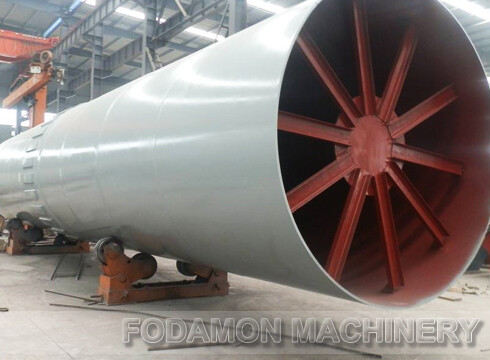
Rotary Kiln
Rotary kiln is widely used for high-temperature calcination and thermal processing in cement, metallurgy, chemical and lime industries. It features stable operation, large processing capacity, uniform heating and strong adaptability for various industrial materials.
- Efficient Thermal Processing – Stable calcination with uniform heat distribution
- Wide Industrial Application – Cement, lime, metallurgy and chemical processing
- Large Processing Capacity – Continuous operation for industrial production lines
- Reliable Rotary Structure – Durable design with stable long-term performance
Tell us your material type, processing capacity and heating requirements. Our engineers can recommend a suitable rotary kiln solution for your project.
If you want to learn more about our rotary kiln and solution, Leave a Message!
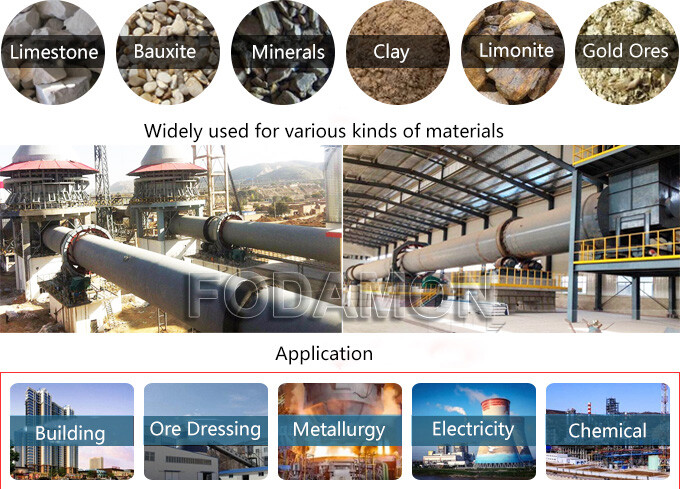 Introduction of Rotary kiln
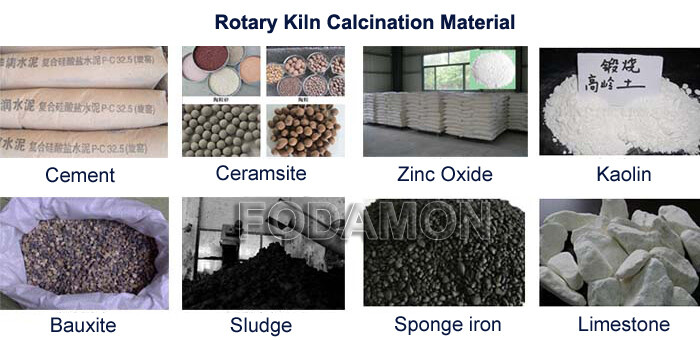
The technology of calcining ultra-fine kaolin in ceramsite rotary kiln at medium temperature (950 ~1050 C) is mature and advanced in China, which represents the development direction of ultra-fine kaolin calcination technology. This calcination technology has the advantages of low energy consumption, high output, dehydration, decarbonization and whitening of products, stable performance, and can be used in papermaking and coatings industries.
Metallurgical and chemical kilns are mainly used for magnetizing roasting of lean iron ore in iron and steel plants of metallurgical industry; oxidizing roasting of chromium and nickel iron ore; roasting clinker and aluminium hydroxide in refractory plants; roasting chromium ore sand and chromium ore powder in chemical plants.
Chemical rotary kiln is mainly used for calcining chemical clinker, which can be divided into two categories: dry process kiln and wet process kiln. Chemical rotary kilns are mainly used for magnetizing roasting of lean iron ore in iron and steel plants of metallurgical industry; oxidizing roasting of chromium and nickel iron ore; roasting of high-bauxite vanadium ore and clinker and aluminium hydroxide in bauxite plants; roasting of chromium ore sand and chromium ore powder in chemical plants.

Cement rotary kiln is mainly used for calcining cement clinker, which can be divided into dry kiln and wet kiln. Metallurgical and chemical kilns are mainly used for magnetizing roasting of lean iron ore in iron and steel plants of metallurgical industry; oxidizing roasting of chromium and nickel iron ore; roasting of high-bauxite vanadium ore and clinker and aluminium hydroxide in bauxite plants of refractory materials plants; roasting of chromium ore sand and chromium ore powder in chemical plants. Lime kiln (active lime kiln) is used to roast active lime and light-burning dolomite for iron and steel plants and ferroalloy plants.
If you want to learn more about our rotary kiln and solution, Leave a Message!
 Working Principle of Rotary Kiln
The cylinder of rotary kiln is rolled up by steel plate, lined with refractory lining, with a specified inclination to the horizontal line. It is supported by three wheel belts on each supporting device. A large ring of teeth is fixed on the inner cylinder of the span near the wheel belt at the feeding end with a tangential spring plate, with a pinion meshing with it. In normal operation, the main drive motor transmits power to the open gear device through the main reducer to drive the rotary kiln.
Material from the kiln tail (high end of the cylinder) into the rotary kiln calcination. Due to the inclination and slow rotation of the cylinder, the material rolls in the circumferential direction and moves along the axis (from high end to low end) to continue the process. Finally, the clinker is generated and cooled by the cooler through the kiln head cover.
Fuel is injected into the kiln from the kiln head. After exchanging the waste gas generated by combustion with the material, the fuel is exported from the kiln tail.
Fuels used in rotary kilns can be divided into: 1. solid fuels, such as coal and coke; 2. liquid fuels, such as heavy oil, kerosene and diesel oil; 3. gas fuels, such as liquefied petroleum gas, producer gas and natural gas.
Ensuring Driving Stability: A rotary kiln requires perfect synchronization in its driving mechanism. Our custom-engineered Girth Gears are heat-treated to withstand the high temperatures and heavy loads of kiln operations. We recommend regular inspection of the meshing pattern between the girth gear and drive pinion to prevent vibration and unplanned downtime.


If you want to learn more about our rotary kiln and solution, Leave a Message!
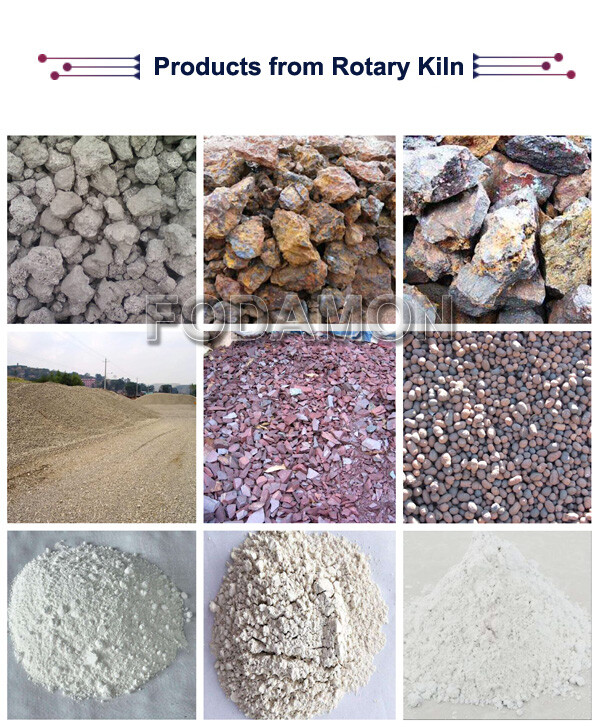
Rotary kiln technical parameter
|
Model |
Specifications |
Main reducer |
Main motor |
Number of support |
Weight |
Mark |
|||||
|
Rotary speed |
Slope(%) |
Capacity |
Model |
Speed ratio |
Model |
Power |
Rotary speed |
||||
|
φ1.9/1.6×36 |
0.53-1.59 |
4 |
2.5-4 |
JZQ750-1 |
45.58 |
JZT-72-4 |
30 |
1200/400 |
3 |
53 |
|
|
φ2.1/1.8×36 |
0.5-1.51 |
4 |
3.9-5 |
UT2-110 |
163.36 |
JZS-81 |
30 |
1410/470 |
3 |
75 |
|
|
φ1.2×25 |
0.5-1.6 |
3 |
0.3-1.2 |
PM650 |
40.17 |
JZTY71-4 |
15 |
1200/120 |
3 |
34 |
|
|
φ1.6×32 |
0.158-0.258 |
3 |
0.6-2 |
PM750 |
48.57 |
JZJY61-4 |
22 |
1200/120 |
3 |
46.82 |
|
|
φ1.8×45 |
0.66-1.98 |
4 |
1-4.5 |
UT2 |
163.36 |
JZS-81 |
30 |
1410/470 |
3 |
80 |
|
|
φ2.2×50 |
0.125-1.25 |
3.5 |
2-8 |
ZS145 |
157 |
YCT280-4A |
45 |
1320/132 |
3 |
130.71 |
|
|
φ2.5×50 |
0.516-1.549 |
3.5 |
5.5-13 |
ZS165 |
99.96 |
YCT355-4A |
55 |
1320/440 |
3 |
167.5 |
|
|
φ3×48 |
0.3309-3.309 |
3.5 |
9-20 |
ZL130 |
32.11 |
ZSN4-250-21B |
90 |
1500/150 |
3 |
237 |
Outside predecomposition calciner |
|
φ3.2×50 |
0.398-3.975 |
3.5 |
13-32 |
ZL130 |
40.85 |
ZSN4-280-11B |
190 |
1000/100 |
3 |
263 |
Outside predecomposition calciner |
|
φ3.3×52 |
0.391-3.91 |
3.5 |
14-38 |
ZSY500 |
27.707 |
ZSN4-315082 |
190 |
1000/100 |
3 |
280.8 |
Outside predecomposition calciner |
|
φ4×60 |
0.396-3.96 |
3.5 |
32-80 |
ZSY630 |
34.601 |
ZSN-355-092 |
315 |
1000/100 |
3 |
487.5 |
Outside predecomposition calciner |
|
φ4.2×60 |
0.4165-4.165 |
3.5 |
45-100 |
ZSY710 |
35.526 |
ZSN4-355-12 |
420 |
1000/100 |
3 |
576.1 |
Outside predecomposition calciner |
|
φ4.3×62 |
0.398-3.98 |
3.5 |
51-120 |
ZSY710 |
35.714 |
ZSN4-355-12 |
420 |
1000/100 |
3 |
598.5 |
Outside predecomposition calciner |
|
φ4.8×74 |
0.35-4 |
4 |
90-200 |
JH710C-SW305-40 |
42.226 |
ZSN-400-092 |
|
|
|
|
Outside predecomposition calciner |
Note:This is just reference. Please contact us to get suitable solution and competitive price.
If you want to learn more about our rotary kiln and solution, Leave a Message!
Package
Packaged with exporting wooden/plywood case. And the package can be customized.
Packing Photos

Loading the cabinet
